










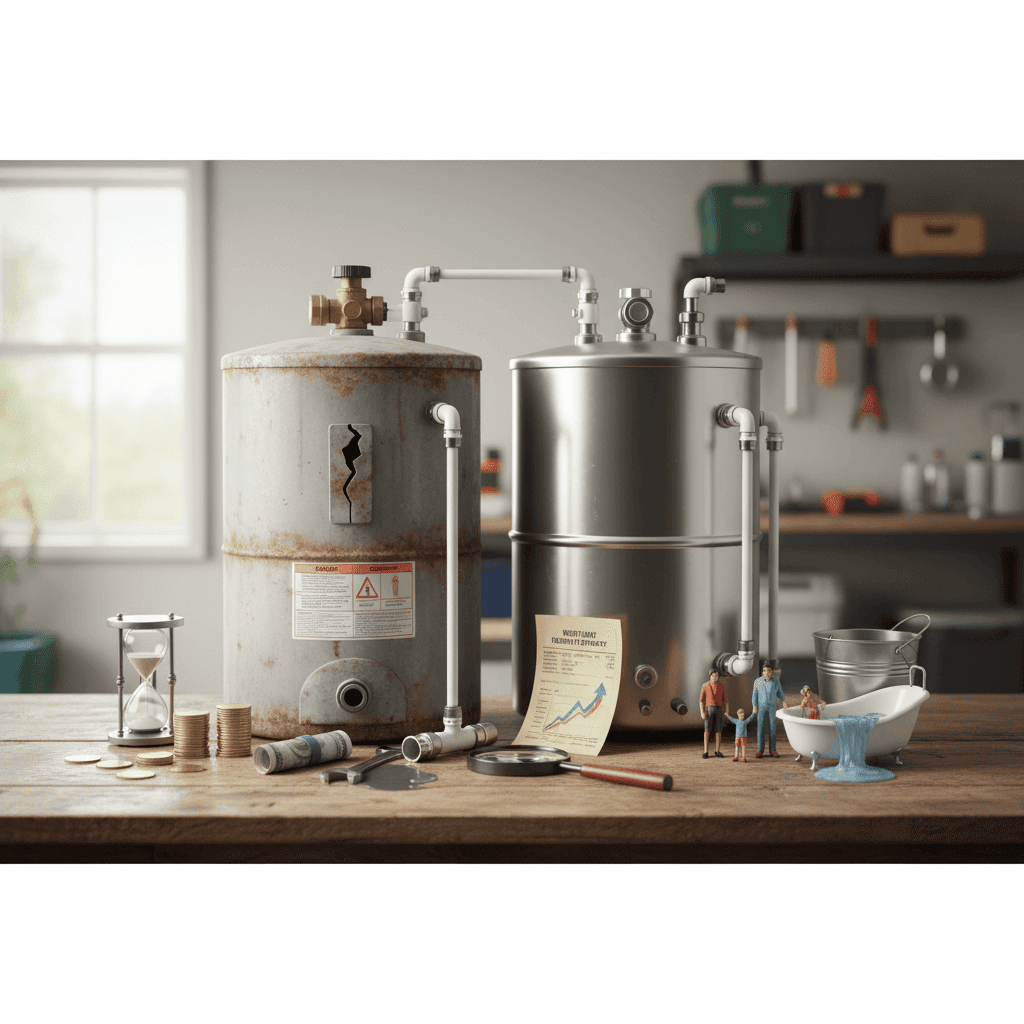
Replacing a water heater catches many homeowners off guard. The heater runs quietly for years, then suddenly stops giving enough hot water or starts leaking. That surprise moment kicks off a bunch of choices that impact comfort, energy bills, and how fast the fix happens. Understanding the key things about swapping out a water heater before it breaks makes the whole thing easier and helps pick a fix that keeps your home cozy and your costs steady for a long time. Keep reading to find out the secrets to making smart decisions and avoiding costly mistakes.
This article walks through the key elements to weigh when a water heater nears the end of its life. You will get practical tips on sizing, fuel type, energy considerations, common installation hurdles, and simple rules of thumb about when to repair and when to replace. After reading, you will have a clear checklist to guide conversations with contractors and to compare options with confidence.
1. Age and condition of the existing unit and why it matters
One of the clearest water heater replacement factors is the age of your current unit. Most standard tank water heaters last eight to twelve years while tankless units commonly last 15 to 20 years. If your tank is older than a decade, the odds of failure climb, and corrosion inside the tank can cause hidden leaks or reduced efficiency.
- Look for visible rust at the tank base or fittings.
- Note frequent pilot outages, fluctuating temperatures, or strange noises from the tank.
- Check the anode rod if accessible. A heavily corroded rod indicates internal wear.
Example: A 12 year old gas tank that makes rumbling noises and produces less hot water likely needs replacement rather than a temporary repair. The cost of patching an old tank can approach the price of a new unit and leave you with the same risk of another failure.
2. Types of water heaters and how they affect replacement decisions
Picking the right style is a major factor in any replacement plan. The common types include tank storage heaters, tankless on-demand units, heat pump water heaters, and solar-assisted systems. Each has pros and cons tied to installation complexity, upfront cost, space needs, and operating expense.
Tank versus tankless
Tank models are simpler to install and usually cost less upfront. They provide a reservoir of hot water, but they lose energy through standby heat loss. Tankless units heat water on demand, which can lower energy use when household hot water demand is moderate. However, tankless systems require higher initial investment and sometimes upgrades to gas lines or electrical service.
Fuel types and site fit
Consider whether your home uses gas, electricity, or a mix. Gas heaters tend to heat faster and are common in areas with natural gas service. Electric models are easier where gas is not available but may have higher operating costs depending on local electricity prices. Heat pump water heaters use surrounding air to heat water and can offer strong savings in warm climates, but they need space and proper ventilation to perform well.
3. Sizing and capacity: choosing the right unit for your household
Proper sizing is one of the most practical water heater replacement factors. Too small a tank means running out of hot water at inconvenient moments. Too large a unit wastes energy and space. For storage tanks, consider family size and peak hour demand. A four person household commonly uses a 50 gallon tank, but usage patterns vary.
- Estimate peak hour demand: tally showers, laundry, and dishwasher use in the busiest hour.
- For tankless units, match flow rate to simultaneous fixtures. A typical shower uses 1.5 to 2.5 gallons per minute.
- Allow margin for appliances you might add, such as a second bathroom or a washer replacement.
Tip: When in doubt, consult a plumbing professional who can calculate required capacity based on your hot water profile. An oversized tank increases costs while an undersized one reduces comfort, so aim for a balanced match.
4. Energy efficiency and long term operating costs
Beyond purchase price, operating expense can dominate lifetime cost. Energy efficiency is therefore a central replacement factor. Look at energy factor ratings for tanks and energy factor or uniform energy factor for tankless models. A higher rating means less fuel used to deliver the same hot water.
- Compare annual operating cost estimates for candidate models in your local climate.
- Consider insulation options for tanks and the potential benefit of a timer or thermostat setback where appropriate.
- Be aware that a higher efficiency unit may cost more initially but can lower monthly utility bills significantly over time.
Example: Switching from a 10 year old electric tank with poor insulation to a modern heat pump unit can reduce water heating bills by a third to half depending on electricity rates and usage.
5. Installation challenges and site considerations
Installation complexity is a practical factor often overlooked when budgeting replacement. Site constraints can add labor and material costs. Before committing to a new model, review clearance requirements, venting paths for gas units, electrical panel capacity for electric or hybrid models, and the presence of hard water that accelerates scale buildup.
Permits and code requirements
Many localities require permits for water heater replacement. Codes govern venting, combustion air, pressure relief, seismic straps in some regions, and placement relative to drains and living spaces. Skipping permit work can lead to failed inspections and require corrective work later.
Venting, fuel connections, and access
Gas tankless units may need new venting or larger diameter chimneys. Electrical tankless models often require high amperage circuits and possibly a panel upgrade. If the water heater is in a tight closet, moving to a larger unit or a model that needs clearance can mean cutting into drywall or relocating utilities, adding to cost.
Tip: Ask a contractor to inspect the site before pricing. A clear written estimate that lists potential extra fees for venting, electrical work, or drain adjustments avoids surprises on installation day.
6. When to repair versus when to replace
Deciding between repair and replacement is one of the most important water heater replacement factors. Small problems on a relatively new unit often merit repair. Repeated failures, persistent rust, or an old unit near the end of its rated lifespan usually point to replacement.
- If the repair cost approaches 50 percent of a new unit, replacement is generally the wiser financial move.
- Leaks from the tank itself are not repairable; they indicate replacement is needed.
- Frequent heating element failures in electric tanks suggest broader corrosion or sediment issues and may call for replacement.
Example: A 13 year old gas tank with a leaking seam should be replaced rather than patched. Conversely, a 3 year old tank with a faulty thermostat or element is typically worth repairing.
7. Warranty, maintenance, and long term protection
Warranty terms and planned maintenance are key factors that affect lifetime cost and reliability. Look beyond the headline warranty length and read details about coverage for the tank versus components and any conditions that void the warranty.
- Understand what the warranty requires you to do, such as annual flushing to prevent sediment buildup.
- Consider purchasing a service plan or scheduling regular maintenance to extend life and preserve warranty coverage.
- Retain receipts and service records. They can be crucial if a warranty claim becomes necessary.
Tip: A longer parts warranty can be valuable, especially for expensive components on tankless or hybrid systems. Regular maintenance such as flushing a tank once a year reduces sediment and preserves heating efficiency.
8. How to find reliable local replacements and what to ask
Choosing the right contractor is one of the final water heater replacement factors. A good trade professional offers a clear estimate, explains tradeoffs between models, and lists permit and disposal fees. When you call, ask specific questions about experience, licensing, estimated timeframe, and whether the price includes labor, removal of the old unit, and testing.
- Request references or recent project photos for similar installations.
- Confirm the contractor will perform required permit work and inspections.
- Get a written guarantee on workmanship in addition to the manufacturer warranty.
Example script: Ask a candidate to outline the total project cost, what is excluded, expected timeline, and the permit process. A clear response shows the company understands local rules and common installation challenges.
Local providers can also guide you to models well suited to climate and utility rates. If you prefer a full service option that handles permits, disposal, and final testing, look for firms that offer end to end replacements including appliance and plumbing setup like many area service providers do for homeowners in Fort Worth.
When you are ready to start, you can request water heater replacement services to get a site visit and written estimate so you know what to expect and can plan accordingly.
Conclusion
Choosing to replace a water heater involves several meaningful factors from the unit age and condition to fuel type, sizing, energy use, and installation constraints. Each factor influences cost, comfort, and long term performance. By checking the unit age, assessing visible wear, matching capacity to household needs, and weighing energy ratings you can make a rational comparison between repair and replacement. Be mindful of site issues such as venting, electrical capacity, and permit needs to avoid unexpected costs. Ask contractors specific questions about scope, warranty, and what is included in the estimate so you can compare bids on an even basis.
Good maintenance extends the life of any water heater, so plan regular inspections and tank flushing as required by the manufacturer. If you are unsure about sizing or local code, schedule a professional assessment before purchasing equipment. A clear plan saves money and reduces interruptions to daily life. When you are ready, reach out for a detailed estimate and a proposed schedule so the replacement goes smoothly. Taking these steps will get hot water back on reliably and with predictable costs.